Where do you sleep when a trip takes you away from a standard hotel room? This episode features some of the more unusual kinds of places we can stay on our travels – some brilliant, but some pretty uncomfortable!
I chat first with Tim Geisler, a bit of a master of unconventional accommodation, who shares some tales of sleeping in rough spots as well as beautiful ones. Next, James Ward, who leads conservation-focused safaris, talks about scouting remote stays and why comfort isn’t always the most important part. My final guest is Russell True, who shares insights from a career spent in a style of accommodation I confess I knew very little about — you’ll have to listen to find out what it is!
Links:
- Tim Geisler – Nautilus Sailing
- James Ward – Rewild Safaris
- Russell True – True Ranch Collection
- Join our Facebook group for Thoughtful Travellers
- Join our LinkedIn group for Thoughtful Travellers
- Sign up for the Thoughtful Travellers newsletter at Substack
Episode Transcript
Amanda Kendle 0:00
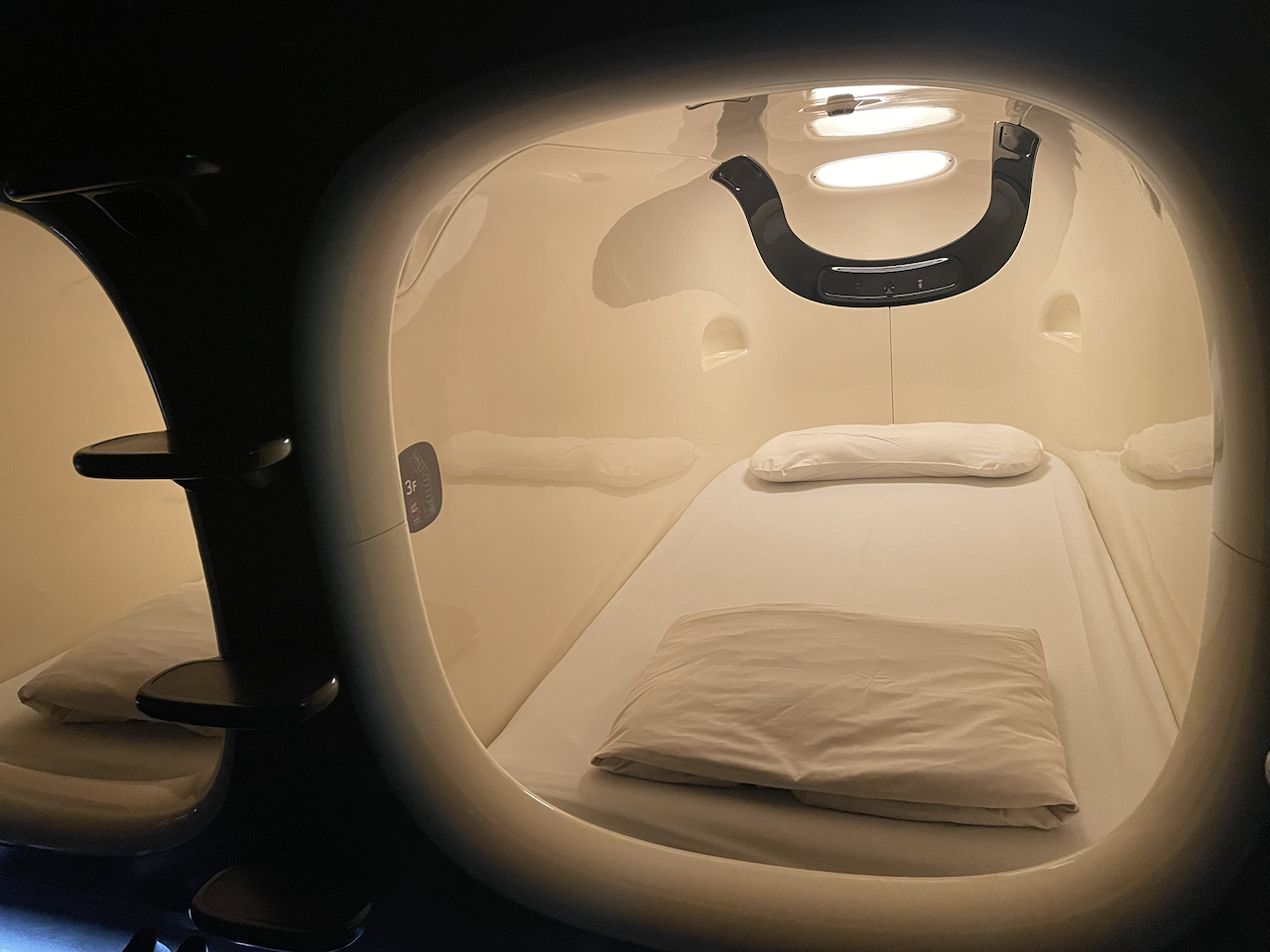
This is the Thoughtful Travel Podcast. I’m your host, Amanda Kendle of the notaballerina.com travel blog. Every episode, I’ll share travel tales from several fellow travel lovers, and together we hope to entertain and inspire you, remind you of some of your own great travel experiences, and encourage you to hit the road again soon. Hello, and welcome to episode 394 of the Thoughtful Travel Podcast. We are talking about unusual accommodation today. Firstly, I’d like to pay my respects to the Whadjuk people of the Noongar Nation, where I’m recording this podcast. So, this episode is all about the places that you might end up sleeping on your travels that are, I guess, not a traditional hotel bed. This might be good or it might be bad. We’ve got all sorts. I think the most unusual accommodation I’ve used in recent years was a capsule hotel in Tokyo. So, on our way to hike in Tohoku, a couple of years ago, my friend Catherine and I had a night to stay over in Tokyo. We just really needed to sleep and then get on our way the next day, so we thought, okay, this is our chance to try out a capsule hotel, both out of interest and because it was good for the budget as well. Now, when I posted photos of my capsule, a lot of people said to me that it looked very claustrophobic, or like having an MRI in the hospital, or something, but honestly, it was a great way to sleep. It was very comfortable, and truly quite cozy, I guess. The only downside was that, because all the capsules are, of course, next to and on top of each other, they had a no talking rule, which I understand, but Catherine and I had to try hard to remember that when we were coming and going, because we do like to have a chat, but we did then just revert to messaging each other from inside our individual capsules, and it was fine. I’ll include some photos of the capsule hotel in the show notes. So, on to some other tales of unusual accommodation. My first guest is Tim Geisler, who now runs a business training people to sail, but before that did many different kinds of travel. I started out asking Tim about any examples he had of more unusual places he had stayed while traveling.
Tim Geisler 2:15
There’s quite a few of these, definitely some weird ones. I don’t think they would actually fall under the category accommodation for some of them. I think. There was, you know, back in the day. I don’t know if in Australia, if you guys have the term, but we have the term dirt bagging here, where dirt bagging is like, if you’re a traveling surfer or traveling, whatever, dirt bagging just means you’re living rough with barely anything, and you’re just kind of dirt bags, sleeping in the dirt, kind of thing. So, there were definitely lots of accommodations, you know, sleeping on a tarp on the beach in Mexico. Many, many of those. I was on a bus once in Nicaragua, making my way back from Costa Rica all the way back to California on busses, and pulled into this tiny town in Nicaragua, and the one hotel in town was full when we got there, so I didn’t know what to do, and the bus driver, he’s like Tim, I’ve got a second hammock, we’ll string it under the bus, so we were actually had hammocks strung under the bus, and just this torrential downpour the whole night, but it was so cool swinging under the bus with the rain kind of cascading all around, and this bus driver, Nicaraguan bus driver, snoring merrily beside me, that was definitely an interesting accommodation. Is
Amanda Kendle 3:23
there space under the bus?
Tim Geisler 3:25
I know it was. It was pretty tight, but these busses in Nicaragua would go on these dirt roads, these little remote towns, so they were a little more lifted up. It wasn’t like a traditional school bus, so they were a little higher to clear rocks and things. So we were pretty close to the ground, but at least we could kind of get a hammock under there. So that was one, and then there was another time in Costa Rica, where we were on a surf trip way down out in the middle of the jungle, and spent a couple nights, and we were just sleeping in our board bags, and it just started raining heavily one night, so we decided to kind of play Survivor, and we tried weaving palm fronds together to kind of make a temporary hut over ourselves. It was not very, not very dry, and we had these little kind of orange and purple crabs that kept crawling up into our board bags, and you would wake up just feeling something on you and freaking out. So, I don’t think we slept much that night, so I don’t know if you could really call it accommodation, but those were the three probably most unusual places or accommodations I’ve had. I wouldn’t want to do them now, for sure, right? I’m a little too old, and kind of like my bed nowadays. A mattress is kind of nice,
Amanda Kendle 4:30
I think. So, too, I mean, I don’t mind, you know. I’ve slept in some pretty dodgy hostels and stuff over the years, but I have definitely never slept under a bus. And now, tell me more about where you’d sleep now.
Tim Geisler 4:40
So, now, so you know, I’ve slept. We started a sailing company about 17 years ago, and we help introduce people to sailing and help people embark kind of on their sailing adventures, and it’s been a neat shift for me, where you know I love travel, and sailing has just become this ultimate platform for adventure and discovery. It’s a back way into. Cultures and places where you’re kind of coming in through a back door, so it’s just it’s an amazing place to travel. So I’ve traveled a lot on boats, spent a lot of time in little tiny cabins, sleeping up on deck and down below, and trampolines on catamarans and things like that. But again, most of the time you know you’re anchored in these beautiful places with white sand beaches and all that, so it really doesn’t seem like a hardship, you know, sleeping on the deck of a boat when you’re in a gorgeous, you know, Caribbean island or something like that.
Amanda Kendle 5:26
Yes, a bit of adaptability goes a long way when you are finding somewhere to sleep, and enjoying the surroundings can make it awfully. Does
Tim Geisler 5:35
that’s right, that’s right. It’s worth, you know, it’s worth the sacrifice if you’re in a stunning place.
Amanda Kendle 5:39
Oh, I love that. It’s worth the sacrifice if you’re in a stunning place. Absolutely true. Yeah, I don’t really have any need for luxury at all, but I definitely need a bit more comfort than when I was in my 20s. I’ve never done much dirt bagging, that’s a term I learned from Tim, but I’ve definitely had some pretty rough and uncomfortable nights to save money, the kind that I would now try seriously hard to avoid. I think one simple one that springs to mind, actually, is a night in the airport in Vienna, in Austria. I was living in Bratislava at the time, right nearby, and we had flown back in from a trip to Tunisia, but there was heavy snow, and it had delayed all of the flights landing anyway. By the time we landed in Vienna, all of the trains or busses back to Bratislava had finished for the night, so it was midnight, I think. And rather than spending money getting accommodation in Vienna until the morning, which is what I would do today, we just slept on the plastic benches of the McDonald’s at the airport. It was closed, so we just slept there, and I remember it being surprisingly comfortable, weirdly enough. But I do remember the cleaning staff woke us up at about 5am and that was quite annoying. But yeah, these days, if that happened to me, I would definitely be looking for an actual bed. Now, my next guest is James Ward, and as part of his role leading conservation focus safaris in a few places around the world. He also needs to travel to check out potential new accommodation for his guests, including in some very remote places.
James Ward 7:09
Last year, I spent a week touring Tierra del Fuego with a friend, and it was one of those places you have to run a pickup, you’re putting extra gas cans in the back, and just driving, and we were staying at a lodge. This was probably the southernmost lodge in Chilean Patagonia, but they didn’t really give us directions of Allagotti, and we had a boat tour. It was two of us were going out to see glaciers in the fjords, and so we left the first where we were staying like 5am to get there at seven, and we get to this beach. The road ends at a beach, and where are we? There’s nothing here. So we look, and there’s a guy, there’s a pickup truck, and like a camper, and two people sitting up. Was like, oh, that must be it. So we drive on the beach to go to them, and they say, ‘Follow us. So it’s the captain, only speaks Spanish, his first mate is French, and we’re both American, who don’t speak either of those two languages, so it was enjoyable, and there’s not like there’s internet connection to try to figure this out. So we follow them along the beach, we get to like a cliff going up, and we just drive along it, and there’s, you know, the water’s right to our right, and then we drive out, and we get to like a different beach, the boats moored there, we’re looking around at one of the most beautiful places I’ve ever been, if not the most beautiful mountains everywhere, glaciers, you know. It was basically the start of snow, so we call it in Alaska’s termination dust. So it’s the termination of summer, because now that this first snow is falling on the tops of the mountains, and the guy says, “Oh, there’s your that’s where you’re staying tonight, and we’re looking, and always see our woods, and we’re like, what do you mean, you’re like, yeah, your, your place is back there, and so we’re like, okay, so we do the tour, we come back, they drive us up to the lodge after we, it’s behind the trees, so thankfully they built it naturally, they hadn’t taken trees down, but then they start talking to us, and I’m like, “Well, when are you leaving? And we’re like, “Well, we have to leave really early, say Tuesday morning. And, like, you guys need to check the tide charts. Look, what do you mean? Like, if it’s high tide, you can’t get out. So that place where we ride the cliff at high tide, you can’t drive through that, right? So I looked up my buddy, I was like, “We had no idea what would have happened if nobody told us how to get there. If we had just showed up on this beach, and there’s water, we would never have seen any way to drive, and we would never would have found this place, and we’d have been like, we’re seven hours from anywhere at this point. So then we go up to the lodge, there’s one person who works at the lodge, very nice, she’s asked to do everything, but it’s obvious she is, she likes to be alone, right? She’s in the middle of nowhere, the only person at a lodge, but she’s also not like technical, and the lodge is powered by generator, but she doesn’t know how to work the generators, so the generators go out, and thankfully we know how to work the generators, so we would start it, but I was like, what would you do if we didn’t know this, so then they put us on. Room, and now this is April in Patagonia, so you’re just getting into winter. It’s cold. She’s like, at 11 o’clock, we shut the generators for the night, and we’re like, okay, was the heat still works? Like, no, he’s electric. So, like, okay, so we blast our heat and try out, but the rooms are not really well insulated, so at two in the morning it is cold, and then you wake up, so the generators go back on at like six seven when you wake up, so you’re like, okay, I’ll take a hot shower.
James Ward 10:24
Well, the regulator in the shower wasn’t working well, so it’s either scalding hot or you basically had to take cold showers. So you’re like, well, it can’t do that. But I will tell you, with all that, the food that she cooked was unreal, so good. I mean, fresh seafood, everything, everything about it. I will still say it’s one of my favorite lodges I’ve ever been to, with all of that, because it was like in a week we saw two other people.
Amanda Kendle 10:48
Oh, fabulous.
James Ward 10:49
We had a King Penguin come up on the beach, and it was just my buddy and I and a King Penguin. Right? I mean, the tour out to see the glaciers, we saw elephant seals, we saw we were standing 360 glaciers, and it was just my buddy and I, and the captain, first mate, and I was like, there are not many places in the world that you can do this. So, it was interesting that it’s just this lodge in the middle of nowhere, but again, for me, it’s about experiential luxury. Now, I wouldn’t send most of my travelers there, or those who are like, I want more of a rugged experience. I tell them this is that’s the spot. Any place again, as I mentioned, I love bush camps, but I was just at some bush camps in Zambia, where the tents were basically mesh netting, so almost screens, and I was in North Wangwa National Park, which is a conservation success story, but new, the wildlife there is really wild because there’s not a lot of tours in there, they’re not habituated, and so I’m sitting in this tent and it’s a full moon, so now I can see 360 views of the area and the big bull elephant comes right up and I’m saying I could have reached out and pet thing, and just watching this, and then the bathrooms were like they were, it was fenced, but it’s outdoor bathroom, but fence, so it’s private, but no ceiling, so all I’m thinking there is, I see the elephant come in and put his trunk in, sniffing, and you know, there’s water in the bucket shower, there’s water in the sink, like it’s like a bucket sink, and I’m like, oh my god, he might take my toothpaste, he could take my toothbrush, like anything, he’s just smelling, but you were, it was basically like the only thing is this really thin screen between you and the wildlife, and just seeing this monstrous beloved, and who I know is now not used to people, so it was a true, it was an amazing experience for me, and I’ve been to Africa 50 plus times, that experience to me, and that camp, I love it, and I tell everyone, this is the type of tent you want, I actually tell people who are building camps, like, please use this type of tent, because it again, it just gets you closer to the wildlife,
Amanda Kendle 13:03
but I need someone like you there to really reassure me before I went to bed that night.
James Ward 13:08
So, it’s funny, but I spent 30 days in Zambia. I was touring all over. The last 10 days, I had friends, my wife and friends came, and we were in these types of tents, and most of them, it was their first trip to Africa, and I was nervous. Okay, how are they going to do with it? And yeah, someone would come up the first morning detail as well, but every one of them said this: I wouldn’t do it any other way. And I had, you know, some of the people that were on the trip could have stayed at any camp they wanted to, price wouldn’t have been an issue, and they said, I love this bush camp, I would stay in these, this type of place, because the experiences that we had, I mean, they had lions next to the tent, they had one place the elephant slept outside that bathroom, mother and baby elephant laying down sleeping next to their tent. We were at dinner at one of the camps, and lions came through camp, and so we just watched them walk through, and so you know it’s set for those who haven’t been on safari, have an experience like that’s crazy when you’re there, and again, this is part of, as you’re there, you realize, you know, these animals aren’t out to kill every human that’s anywhere, that they’re, they’re living their lives, and you’re just part of it, and if you take the proper precautions, have the right guides, yeah, you’ll see it,
Amanda Kendle 14:18
yeah, so I’ve not yet had the good fortune of taking a safari trip in Africa, and I’m not even convinced I actually want to be this close to the wildlife, but I do like James’s thinking about how accommodation that enhances your experience is more important than being luxurious, for sure. I definitely pick experience every time. Now, my final guest is Russell True, and he spent his career working in a kind of accommodation I have to confess I didn’t know much about, so I was very keen to talk to him and find out more.
Russell True 14:50
You know, I think we are an unusual accommodation in the broad sense. You’re at a ranch and people say, what’s a dude ranch, and my short on. Honest answer is a ranch that takes guess. I say it simply and generally like that, because dude ranches come in such a wide variety of shapes and sizes, and and styles. We have ranches in Wyoming, Montana, and I’m in Arizona, and just area specifically, they don’t look that much alike, you know, log cabins in the north and adobe and stucco, and, and the desert in the, in Arizona. So it’s an unusual accommodation, just because of where it is. They’re going to look probably like wherever they are, you know. There’s dude ranch I visited in Georgia, and it looked more like a plantation than a log cabin, and it should have the other difference in a general sense is that at a dude ranch you’re going to step right out into it, they’re usually cabins or accommodations that maybe are in two or three to a building or something like that, but almost always you’re going to step out into the ranch, and that’s going to mean horses, maybe cattle, and big open spaces, and generally beautiful views. You know, there are other accommodations that have that, but dude ranches almost always do. Dude ranches also, in specific, have unusual accommodations. Several dude ranges include glamping in these, you know, high-end tents in beautiful locations. Again, they also sometimes have these covered wagon type glamping accommodations. And then, like our Rancho de la Osa, you know, our newest guest accommodation at Rancho De La Osa is it’s 100 years old, 102 Sometimes these ranches, a lot of times they’re pretty historic, and you might be staying where famous people stayed over the years, or even presidents like at our ranch. And and so it’s unusual in a lot of regard.
Amanda Kendle 17:00
I’m just curious, as an Australian, most of my listeners, more than any, are American, so they will immediately know when you say ranch exactly what is meant. But here in Australia, I’m in my head, is it more like a cattle station? Is it more like a big farm? What makes a ranch a ranch?
Russell True 17:16
Well, it’s going to be much more similar to your cattle station, some, not many of the dude ranches are going to have some similarities to a farm. They may be irrigating, they may be growing, oftentimes they’re irrigating pasture for their horses or cattle, or both. But more likely, much more likely, they’re going to be like your cattle stations, you know, and a lot of them, I’m in Arizona, so we’re not all that dissimilar climate-wise from Australia. It’s a bit arid, so the ranches are often very big to be able to get critical mass number of cattle, but some dude ranches, they’re not really an ag business, they’re really a tourist business, but they’re a real ranch. They have real horses, probably cattle, but they may be on not a huge amount of private land. They may be using a lot of public land, and that could be state or federal, and a wide variety of agencies, but they’re almost always in beautiful places. They put dude ranches. They just naturally show up over the years in places people want to be
Amanda Kendle 18:28
interesting. I mean, I guess it’s like here they need to be somewhere where there’s a lot of space, and places with a lot of space often tend to be beautiful places,
Russell True 18:37
right? And sometimes it’s just that is just the expanse and the big views, and Montana calls it Big Sky Country. Sometimes it is just that, because people in your country, our country, a lot of them live urban lives, and, and that’s okay too. But you know, I like to go visit cities, because I don’t live in one, but, but they like to come visit us, because they do.
Amanda Kendle 19:02
That’s me, absolutely. I’ve been born and raised a city girl, but I do love to get out and, and see the bigger spaces. Yeah, I’ve been to a cattle station a long way north from here, you know, where it’s the size of the land they have is the size of Belgium, because Western Australia is so, so arid and so big and empty, and so they have these enormous ones, but we don’t have this cult. It’s starting to have, like, we call them station stays, and it’s starting to have a little bit of that culture, but nothing like what you guys have with this long-running custom of having people, city people, come to stays.
Russell True 19:37
Well, you know, it started, as you know, over 100 years ago, really, 100 and coming up 40 years ago, and you know the only people who are gonna leave the eastern or midwestern cities were people who could afford the time and had the money, because it was a big long trip, and they, the only way you could make it work is to stay for a month or more, sometimes months. At a time, and so the elite, you know, in America, all the names we’ve heard of, they almost all visited dude ranges. Somebody in that family went to a dude range, and so they ended up shaping the West. They had the wealth, the education, the mindset, and if the West grabbed them, which, of course, often it did, wherever the West was, right, maybe it was the Dakota Territory, maybe it was California, and everywhere in between, but if it really grabbed them, they either kept coming back or even in some cases moved, and the Rockefellers and the Roosevelts, and and all the other names that we know, particularly here in America, they ended up shaping the West because dude ranches invited him out here, and we were the first destination vacation in the West.
Amanda Kendle 20:46
It was so interesting to talk to Russell about dude ranches, and there’s more about the historical aspects to come in a future episode. And honestly, before we chatted, all I knew about dude ranches is what I vaguely remembered from that Billy Crystal movie City Slickers, actually, when I’d first learnt that I was going to interview Russell, I asked about the topic of dude ranches in the Thoughtful Travelers Facebook group, and I got some very helpful answers. So, for example, Erin had explained there is a big spectrum for a dude ranch experience, from rustic to very lux. The city slicker reference is valid, as many families from big cities book vacations where they have catered outdoor experiences, including horseback riding, fishing, campfire meals, etc. Definitely a cowboy theme, I think. For the large part, they are ethical and humane for the animals, but I do my research first. So that was very useful to know, and also Jo, who is another Australian, shared her experience, and she said, “I stayed in a dude ranch in Shell, Wyoming, in 2019 Fantastic experience. It was a vacation with horses, and yes, I guess you are pretending to be a cowboy, but it’s so much fun. The horses were beautifully looked after. We didn’t just ride them, but groomed and tacked them up too. They made sure to swap out the horses every few days, so that they were appropriately rested. We were the only Aussies there, possibly the only foreigners, and we met people from all over the US. Some were very experienced riders. It was excellent, and a once in a lifetime experience for us. But the funniest response was from Eric, and Eric said, I just can’t get my head around the idea that people pay good money to do what was basically my childhood without my dad yelling at you. I love that. Very nice. Thank you so much for listening to episode 394 of the Thoughtful Travel Podcast. I hope it’s given you some new ideas for accommodation when you next travel, or prompted you to think back over some of your own amusing, but maybe less than stellar accommodation experiences, too. Everything that didn’t kill us makes for a good story, right? A big thanks to my guests. Some links for them. First of all, I chatted with Tim Geisler of Nautilus Sailing. You can find out more about what he does at Nautilus sailing.com Next, I chatted with James Ward of Rewild Safaris, more about their [email protected] And last but not least, I chatted with Russell True of the True Ranch Collection. More details about their dude ranches at True Ranch collection.com Don’t forget to chat about your experiences in the Facebook or LinkedIn groups for thoughtful travelers, and to make sure you signed up for the newsletter at Substack at Thoughtful travel.substack.com All of these links and more are in the show notes, and you can find them today at Not A ballerina.com/ 394 As always, thank you so much for listening. This has been another episode of the Thoughtful Travel Podcast. Show notes and other information are at Not a ballerina.com/podcast Join me again soon for another chat about why we travel. Bye for now.

Leave a Reply