I love that chatting with people from other countries can lead to bizarre revelations about cultural differences that you never realised could be an issue at all. And I have to tell you, of the many such conversations I’ve had over the years, nothing has struck quite so many chords as the whole ” how do you wash your dishes” concept.
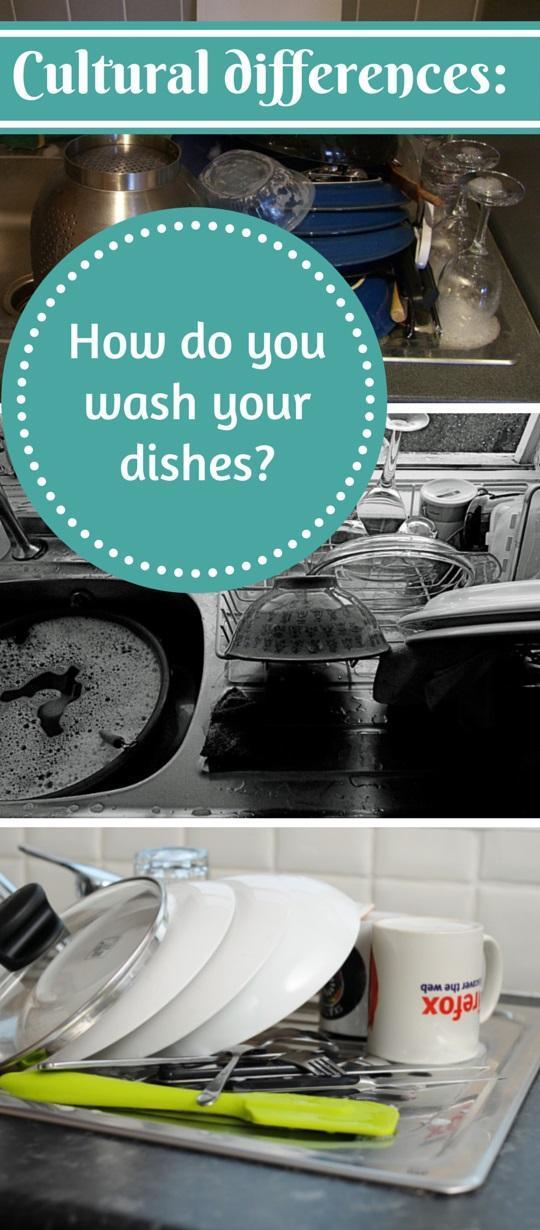
Do Australians have really dirty dishes?
Well, do we? Because the question over how dirty the dishes might be when washed in Australia is what started this whole topic (and sparked a whole bunch of comments, I might add!). Being someone who grew up in Australia, I don’t find the Australian method of washing dishes at all problematic but once it was pointed out to me, I can totally understand how people from outside Australia could find it kind of, well, disgusting. One of the commenters on my first post summed up how he had observed the Australian art of washing dishes (and I have to say it is pretty accurate in my experience!):
Australians wash the dishes in a soapy water, that is OK, no need to run the water all the time. If the water gets too dirty as you continue washing, you can change it easily. HOWEVER, Australians do not have the habit of rinsing after soaping. They should rinse all the dishes quickly after soaping to get rid of the dishwasher liquid which is harmful for health. Each time they rinse they can turn the tap on and off not to use excessive water. Additionally, they use tea towels to dry after soaping. Those tea towels are never bacteria free because they are wet, which is totally wrong to do.
Hmm. It’s true that I don’t usually rinse dishes I’ve washed. I assume that this, like many other related habits we Aussies have, is related to our fear of running out of water. Most parts of Australia are very dry places and we constantly struggle with water shortages, and in summer we often face water restrictions for our gardens and sometimes worse. Many country homes aren’t even connected to scheme water and need to supply their own water from bores, dams and tanks, and in years of little rain this can be pretty tough.
As for the tea towel thing? I hadn’t given this much thought. Luckily I’m too lazy and usually leave my dishes on the drying rack until they no longer need a tea towel.
Beware of dish washing habits (and short shower) if you visit Australia
The corollary of all this is that if you’re a tourist visiting Australia, and especially if you are staying with Australians on a homestay or because you have Australian friends or relatives, it probably pays to be aware that we have some unusual water-related habits! When I taught ESL in Australia, and a number of my (adult) students stayed with Australian hosts in homestay arrangements, they expressed, let’s say, surprise about the dishwashing thing, and concern about another issue – having short showers. A number of them discovered their hosts would ask them to set a timer when they got in the shower and limited shower time to three minutes. Which in my opinion is pretty short … I love my showers, so I suspect I’m not a good Australian!
How do you wash your dishes in other countries?
I’m told that in many other places, people wash their dishes under running water. (This is shocking to me, an Aussie growing up with the “be water wise” message!). Don’t take my word for this though, people have told me, like this Australian who visited Japan:
I remember the first time I saw someone washing them with the tap running (on homestay in Japan) and I found it really distressing to see all that water being “wasted” … but when you think it about it … it probably is more hygienic to wash them in “always” clean running water
An American who secretly agreed with the Aussie method let me know some observations about her roommates from Florida:
Some would let the water run the entire time (I wanted to cry!) while others would turn the water on and off to rinse the dish before and after soaping. Either way seemed inefficient to me.
This adaptation from a Polish family who migrated to Australia is perhaps a neat alternative:
The Polish way is also to use running water. We’ve adapted to the water-wise climate though. We apply dishwashing liquid directly to the sponge to get it nice and soapy. Then wash the dish. Then turn on the tap, rinse the dish, turn off the tap and start on next dish.
And Alexander from Russia said:
In Russia some people are worried about chemicals left on dishes after rinsing. They would be shocked to death about this Aussie way of washing cutlery. In my opinion it must be rinsed after soaping because dishwashing liquid is toxic and dirty water is disgusting. You cannot eat from these “washed” plates again. You can wash in soapy water, but rinsing is a must.
So how do you wash YOUR dishes?
I suspect there are more ways to wash your dishes than there are countries in the world. And probably quite a few diverse opinions about the “less than perfect” Australian way, too! Let me know your dishwashing dilemmas in the comments!
Image credits: thanks to aesop, edvvc and Steven Lilley
You might also like:
 Feeding giraffes at Perth Zoo: Like travelling in your hometown
 Gold Coast accommodation, whale watching, that long beach and more: I’ve changed my tune!
 Abingdon Miniature Village, Mandurah: Kids choosing the destination in Western Australia
 Why tourists should visit the Perth Royal Show (and how pigs fly)
Well mostly in the dishwasher…and those that don’t go in there I actually do rinse (paranoia about the chemicals see!). But I rinse quickly so I don’t waster water!!!
Ah yes of course – as long as you are rinsing quickly then I think that’s an excellent compromise!
This made me smile. When I moved to the UK years ago where they wash the dishes like in Australia, without rinsing them, I couldn’t believe my eyes. In Italy we wash them (without letting the water run for the whole process, that it’s such a waste in my eyes) and then rinse the soap/foam off to finally let them dry.
I have to say that your Italian method is probably a cleaner one than ours Franca!
Ha! Love it!
I was brought up by European parents who taught me to always rinse the dishes. And that there is a method to washing up- you wash the drinking glasses first as the water is the cleanest, then proceed to the next cleanest items, then the dirtier stuff at the end.
When I lived with my Aussie mother-in-law, she would just throw everything into the sink all at once. I was shocked- but it explained why her glasses were always dirty!
I love that her glasses were always dirty! It made me check mine this morning! Fortunately they usually go in the dishwasher so they’re not too bad. Phew!
Ha ha, Luckily we use a dishwasher. We drip dry anything that doesn’t fit in the dish washer 🙂 You have me thinking though about the soap up and rinse method. I think I’ll start rinsing in our caravan and whenever we don’t use the dishwasher. I definitely couldn’t leave the water run though!
Oh yes Jan, luckily we use a dishwasher for most stuff too!! And I agree, there’s no way I could ever leave the water run!! Not in Oz!!
I was born and bred in Iran and lived in the U.S. and Austria extensively before moving to Australia for good and I must say the Aussue washing kept me up at night. I was SHOCKED by your habit of washing. Still can’t figure it out. I mean, as a scientist, I would like to see a study on the amount of nasty chemicals that may be in your fat cells and tissues and the long term synergetstic health effects. It can be quite serious. I really can’t understand it.
I can completely understand this Sara – once it had been pointed out to me, I agree! Kind of amazing that a whole country was brought up this way though – it just seems normal.
My boyfriend once said he didn’t know how to do dishes. My response was “You take a shower/bath right? Don’t you wash with soap, make sure your clean, & rinse your body? Same thing. Wash them, get them clean and rinse.”
I’m in the USA. I think leaving the water running is excessive. I run the water, use my sponge, rinse before they start to dry, and air dry. I never liked having a dishwasher because of the “rinse before you put them in.” If I’m doing that, then I can just take the extra time and wash them by hand.
This is very interesting. What I found fascinating is the fact that you say several times that you can see why people would think your dishes are dirty if they aren’t used to Australia.
You pointed out that in Australia, people learn to not waste water because you may not have any at all. Not just the USA, but people in general sometimes forget that people can run out of water. Be resourceful, or a little faster in the shower.
My pipes recently froze and busted. I was out of running water for almost a month just trying to get someone reliable to fix it. I didn’t realize how much I use and I was very grateful when I could turn it on again.
I would rather take a 3 minute shower then have no water to shower under at all! Great article.
Thanks for your comment Donetta! And you’re right – it doesn’t matter where we live, it’s good practice to conserve water – and as your burst pipes demonstrate, anyone can have no water available sometimes!
For my two years in Australia I just did it the US way which was difficult since most flats had only a single sink. I would wash, drain then rinse and air dry. I also didn’t watch my time in the shower, but I never really heard of the water shortage. This was all in Perth mostly. Today I rinse the dishes and put them in the dishwasher. :^)
Haha this had me all smiling because I do remember feeling strange when I first saw the Aussie way of doing dishes. I grew up in India where water is very precious but the dishes are rinsed. I guess we saved on water bathing using a bucket or two and not showering.
As a Brit I’ve worked out my own way of ‘washing up’. First I wash off any food particles under the hot tap, then attend to glasses, crockery and cutlery using a brush and/or ‘spontex’ cloth (this contains anti-bacterial additions) in soapy water. Any foam can be rinsed off under the hot tap before wiping again with the spontex which acts as a leather. Left on a drainer by the sink, I find everything is practically dry a few minutes later.
As for showering, how about just turning on the water to wet yourself, apply shampoo or gel and rub in then turn water on again to wash it off – easily done in 3 minutes! Why leave the shower running just to wet the drain ? (unless you want to create a sauna)
I’m from Malaysia but lived in Australia many years and it is true Asians are shocked and disgusted by the English people’s (Australian anglos) way of doing dishes – bathing them rather than showering. In the office I always rinse the dishes before I use because I know my colleagues would have just bathed the dishes in soap and then stacked them on the rack. I’m concerned about accumulation of harmful chemicals in the body which could lead to cancer later on in life. One of my colleagues is often very flippant and says that we are going to die anyway, but in my parents drummed into us to keep ourselves healthy so that we do not burden the family to have to care for us by bringing illness unto ourselves. I think it is ok if people choose not to rinse their dishes, but if they are using common property or using their dinnerware to serve guests they should not force their colleagues and guests respectively to take part in the same risks. I know someone may reply that I not accept the invitation to eat at these people’s homes, and I do try to decline if I could do so without being rude.
This is going to be a little long and complicated. I have a method of dish washing that uses minimal water. First organize my dishes from cleanest to dirtiest. Place cups and glasses in a plugged sink or dish washing tub. run the water into a glass just until it is hot filling one or 2 cups. Wet the sponge and apply soap directly to the sponge. tip the water from the first cup into another. Using the sponge scrub 1st cup. Then rinse it over a second cup. Continue like this until cups are done. By this point you should have an inch or 2 of water in the sink. Place plates and bowls in sink along with cutlery. The sponge never touches the water unless it runs out of soap or gets too dry. You now have 3-4 inches of water. Next larger cooking prep stuff and misc items cutting boards mixing bowls storage containers. Finally pots and pans. Air dry by the time you are done you should have 8 inches of water or less perfectly rinsed dishes. Take tub outside and water the gardens with it.
This *is* complicated but it *does* make sense and sounds very sensible!
Thanks for this. Great perspective for me. I am an Aussie Home stay host mum and I have been getting increasingly frustrated with one of my students running the tap full on to rinse something while at the same time barely touching the item to assist with it’s cleaning. The water waste is starting to bother me.
As to chemical residue left on the dishes that are not rinsed as per traditional Aussie method described above…. I don’t believe that it is significant amounts to worry about. One squirt into a sink of water is a lot less usage than my student who squirts each item individually.. More chemical usage and water wasteage. I prefer the Aussie method even after considering the above comments. Thanks for the enlightenment though.
Oh I can imagine that would be very frustrating Tanja!! And yes I agree re chemical residue! Such a funny issue …
You rinse of your body after showering, rinse off your dishes. You not only leave all the chemicals but also left over bacteria from the food and sponge. Just rinse! I’m Iranian who grew up in Belgium and from home I was thought to briefly wet dishes then foam up dishes one by one.. Then rinse them off quickly one by one. You really don’t waste water more than when you fill up the whole sink and wash dirty dishes in dirty water. Which is unhygienic!!! Can’t believe some people can’t see that. And i dont leave the water running while I’m foaming up the dishes.. Sometimes you just rewet the sponge or brush and put some more detergent.. Thats all. But when you do this method you really do see that one squirt of detergent and sink full of water which becomes dirty is not enough! Cuz when you are foaming up one by one and you see the sponge or brush is getting dirty or needs to have more detergent, you realize one squirt of detergent would never be enough!
I’m a science major and I’m baffled. I have Lebanese in-laws. And they are adamant that their way is correct: here’s the deal:
Just barely finish eating, all dishes in the sink. Run water over them, turn off water. Soapy sponge now with gusto rub, rub and rub more and more the sponge over the dishes, again and again and then arrange them (still soapy) on the flat countertop. Let them sit there. THEN, still with now-drying soap, rinse them under running water and THEN put them into the drain to dry. A lot of wasted time/effort here. BUT, yes their way is the correct way (they think). MY way? Hot water, fresh good soap (Dawn), suds, rub and rinse in one gesture, then drain. Done. Adequate hot water and soap exposure, sponge to clean spotlessly, rinsed clear and drain. Done.
Hahaha!!! Oh Dee Dee, yes, it is such a contentious issue isn’t it, who would have thought?!!
Hello! you just have to watch some English sitcom from the 70-80s, when they handwash they do not rinse and they only have one sink :0)
I know that one should not water flowers and other plants with water containing detergent, it is not good for them at all. Or for the environment for that matter.
The idea of this being wide-spread is new to me. I’m Australian and have stayed in plenty of other Australian’s homes for the night. In the 22 years I lived there I never saw someone not rinse. Either you have a bubbly sink and a water (rinsing) sink, or you use running water on and off to rinse after the bubbly sink.
The only time I witnessed an Australian not rinse, was not even in Australia. We had Aussie guests stay with us here in Belgium. They left dishes covered in bubbles in the drying rack. I was shocked!
The American way of using running water that you never turn off, even when you turn around to get something, is horrifying for me to watch. I can understand the reasoning behind it but seeing perfectly good running water wasted is just painful for an Aussie.
I honestly don’t understand the disconnect in the way Aussies (and Brits) do dishes. Let me ask, do you not rinse soap off your bodies and hair when you shower/bathe? When you wash your car, is there not a final rinse step? Do you stop your clothes washing machine after the first cycle and remove the sudsy clothes for drying?
If all of these other things OBVIOUSLY require rinsing, why would dishes, which require even much more stringent hygiene for obvious reasons, be any different?
Perfectly said, I totally agree ?
I scrolled through as many comments as I could being that this thread seems many years worth and I find it interesting ?. What I find really interesting is how few people in the US seem to mention the way we were all taught back in the day. I did see one commenter from Brit mention a similar method. I’m from the last generation trained by the housewives of the fifties. Efficiency was the rule of the day. You first scrape all debri from any plates and empty glasses down the drain. Fill one side of the sink with hot soapy water (like bath temp) then fill the other side with hot (nearly boiling) water.
As the commenter from UK mentioned, we were also taught to start with the glasses and work your way toward the dirtiest dishes. My mother and grandmother also reminded us that by doing your glasses/cups and eating utensils first you are rinsing in the hottest water which is more sterilizing. My mother went a step further and left the utensils to soak as she rinsed the glasses on the top of the water then would grab them out of the water with her dish-gloved hand. You really do not need to “fill” the sink very high with water for this to be effective.
In my 35 years of being a homemaker I have tweaked this process a bit more such as using a wet dish brush over the garbage to scrape meat or sauces off dishes and utensils before adding them to soapy water. ??♀️ I haven’t used a dishwasher the majority of my life. I feel as one commenter mentioned, seems like you have already almost cleaned them already and I hate that dishes often don’t come out clean even using drying agents.
The way of washing dishes that you describe is cultural, and it is exactly how the Dutch do it.
You basically wash the dishes in a mixture of water, detergent and saliva among other things.
okay, so i’m australian and everyone i know rinses their dishes and not one of them dries with a tea towel unless it’s something they need straight away.
My mom is Russian but I grew up in Australia and Canada. I was young in Australia so I never saw the Aussie method described above, or at least I don’t remember it. My mom always taught us to wash and rinse dishes individually. Filling up the sink with water was never a thing; you’d take the dish/piece of cutlery, give it a quick rinse, wipe it down with the brush or sponge until it was clean, and then rinse again. We were also taught to clean as we go while cooking, and wash dishes immediately after eating, so that the food residue would quickly fall off.
I moved to the UK a few years ago because my husband is British and I was absolutely shocked at how his family do the dishes, which seems to be close to the Aussie way. They filling up a tub with soapy water, place dishes in it without pre-rinsing, go over the dishes with a sponge (and running water anyway), then they don’t rinse off the bubbles. I think it’s a Russian thing to be very wary of chemicals put into your body, so I was shocked that people would willingly eat off of plates with chemical residue on them.
My husband said that he thinks my way wastes more water, but when I set up the water account for our flat our rate was based on the usage of our previous tenants, and now we use less water than them. I know that they did it the British way because when we viewed the flat I saw their dish tub. It takes up a lot of water to fill a whole tub, and you’re not necessarily using that much if you’re only washing a few dishes at a time. I’ve also done experiments at his family’s house, washing dishes my way on top of their tub and it never fills up fully, whereas they fill it up completely pretty much every time, and because they leave their dishes for so long the food gets stuck and is harder to scrape off.
Hello, I am from Perú, we also have water shortage but we rinse the dishes. When I moved to this beautiful country Australia I was shocked to see the way Aussies do the dishes. The way we do it is to put detergent on the sponge and rub everything, then rinse them and put them in the rack to air dry. Same as the washing machine washes the clothes, or when having a shower, or washing a car or my dog. RINSE, RINSE, RINSE ????
I am from Spain and for me it also looks very strange that some British and Aussies do the dishes this way. For me there are 2 things that are weird:
1) Not rinsing (unhealthy)
2) Filling the sink with water for washing (waste of water).
Many houses here only have one sink and water shortages in many regions. We don’t fill the sink with water. Instead we place the dishes in the sink (dry) and wet them a bit (optionally), add soap directly to a wet “scrubbing sponge” (those yellow sponges that have a hard green material in one of the sides for scrubbing), scrub the dishes with it and the rinse. This way you mainly use water for rinsing instead of for washing, and I believe that this way is more efficient as for the same amount of water you get everything washed and rinsed.
Instead of going one item after the other I like to do it in 2 phases. First I wash everything and then I rinse everything one by one under the tap letting the water fall from the item I am rinsing onto the pile pending to rinse (partially rinsing the rest). I let everything dry in the air in a rack (no towell).
I also like to wash things from the cleanest to the dirtiest to avoid moving dirt from one dish to the others and clogging the sponge. If you feel that the sponge is running out of soap or is getting too dirty, you rinse it a little bit and add more soap to it.
As I do it in phases and don’t stop for drying the items with a towel I let water running in the rinsing phase. You are only losing the water for the time it takes you to place the item in the rack (which is always near the sink). And this water is not really wasted as it is rinsing the pile of items in the sink. When you arrive to the last items they are already practically rinsed. Many people turn on an off the tap for rinsing every item, but I see it very tedious and inefficient for the little amount of water you save.
If someone would see me here filling the sink with hot water they would scream and would see it like a big waste of water, as we only use the little amount of water for wetting the items and the sponge for washing (it is like having a bath vs having a shower). So if you are worried about the water you can use the water for rinsing instead of for filling the sink.
My hubby came from a strict family who hated waste especially money, and water costs money. So he often showers the navy way during the summer (turn off the shower while you soap up). As to dishes, he grew up filling the second sink 1/2 full with water for rinsing, and the other sink 1/2 full for washing. There was a lot of dish scraping before washing, and now he’s taken to prewashimg dishes in a small bowl to reduce dirtying his water that he dumps to finally wash under a soapy side. The rinse water does get sudsy over time which I don’t like. I think rinsing is important to remove soapy after taste and to eliminate bacteria. Although heat kills bacteria, we often can’t tolerate the temps needed to kill bacteria (I wear lined rubber gloves so I can have it hotter.) When backpacking hiking, I prescrub my dishes using leaves and sand. I’ve often wonder when someone would design a waterless way to wash dishes in the home. It would save so much water!